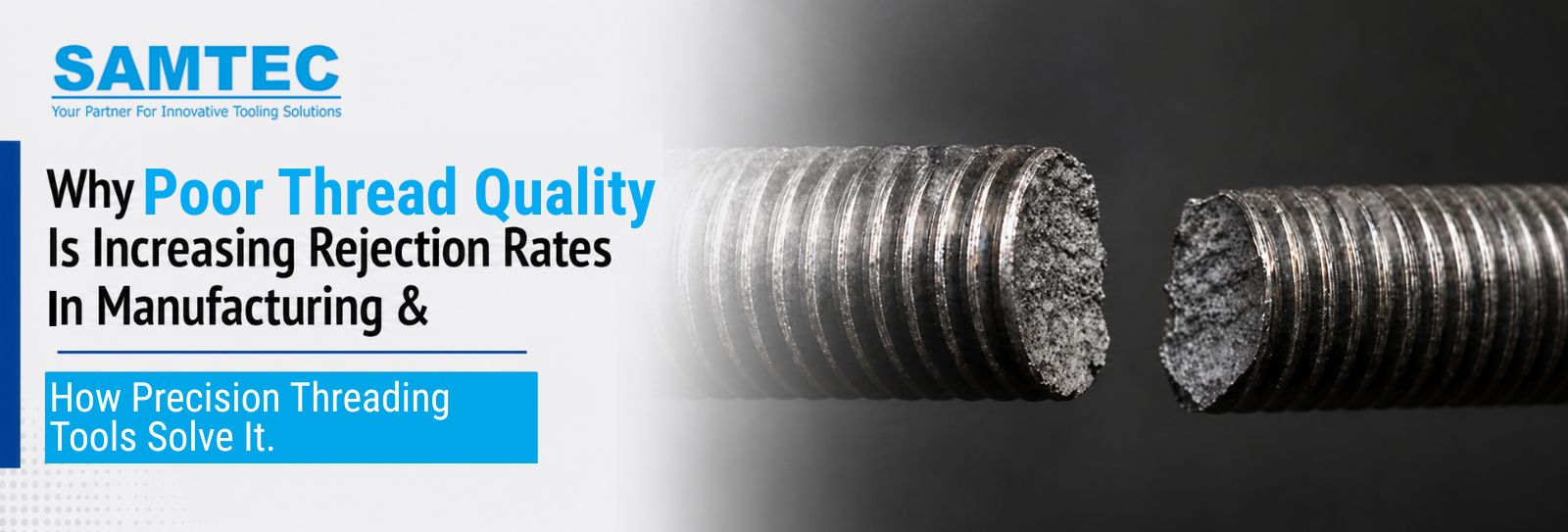
In today's competitive manufacturing industry, precision is everything. Whether producing automotive components, aerospace parts, medical devices, or industrial machinery, every threaded component must meet strict dimensional and quality standards. Unfortunately, poor thread quality remains one of the leading causes of product rejection, resulting in increased production costs, wasted materials, and delayed deliveries.
Manufacturers often overlook the impact of threading tools on final product quality. Investing in precision threading tools, such as Samtec Threading Inserts, can significantly reduce rejection rates while improving machining efficiency, tool life, and overall productivity.
Why Thread Quality Matters in Manufacturing
Threads play a vital role in ensuring secure fastening, proper assembly, and long-term component performance. Even minor imperfections can affect product functionality and compromise safety.
Poor-quality threads can lead to:
• Incorrect thread dimensions
• Poor fit between mating components
• Weak fastening strength
• Leakage in hydraulic and pneumatic systems
• Premature component failure
• Increased customer complaints
• Costly product recalls
Maintaining high thread quality is essential for manufacturers aiming to deliver reliable products while meeting industry standards.
Common Causes of Poor Thread Quality
Several machining factors contribute to poor thread formation and higher rejection rates.
Worn or Low-Quality Threading Inserts
Using damaged or inferior inserts often produces rough thread profiles, inaccurate dimensions, and inconsistent finishes. High-performance Samtec Threading Inserts are engineered to deliver clean, precise threads with exceptional consistency.
Incorrect Tool Geometry
Choosing the wrong insert geometry can result in improper thread profiles, burr formation, and excessive cutting forces.
Poor Machine Stability
Manual filing and grinding consume valuable production time.
Machine vibration and improper tool setup reduce machining accuracy and negatively affect thread quality.
Incorrect Cutting Parameters
Improper cutting speed, feed rate, or depth of cut can cause thread tearing, poor surface finish, and premature insert wear.
Difficult Workpiece Materials
Materials such as stainless steel, alloy steel, and hardened metals require specialized threading tools designed for demanding machining conditions.
How Poor Thread Quality Increases Rejection Rates
Thread defects often remain unnoticed until assembly or quality inspection, making them one of the costliest machining issues.
Manufacturers frequently reject components due to:
• Inaccurate thread pitch
• Incorrect thread angle
• Oversized or undersized threads
• Rough surface finish
• Chipped thread edges
• Poor dimensional repeatability
Every rejected component increases material waste, machine downtime, labor costs, and overall production expenses.
How Precision Threading Tools Solve These Problems
Modern threading technology is designed to eliminate common machining challenges while delivering exceptional accuracy and repeatability.
Superior Thread Accuracy
Precision-engineered Samtec Threading Inserts produce accurate thread profiles that meet tight dimensional tolerances across large production batches.
Improved Surface Finish
Sharp cutting edges and advanced insert geometries create smooth, clean threads with minimal burr formation.
Longer Tool Life
Manufactured using premium carbide grades and wear-resistant coatings, Samtec Threading Inserts offer excellent durability, reducing insert replacement frequency and lowering tooling costs.
Excellent Chip Control
Efficient chip evacuation prevents chip buildup around the cutting zone, improving thread quality and protecting both the insert and workpiece.
Consistent Production Performance
Reliable threading tools maintain stable machining performance even during continuous production, ensuring consistent quality from the first component to the last.
Benefits of Using Samtec Threading Inserts
Manufacturers looking to reduce rejection rates and improve machining efficiency can benefit from the advanced design of Samtec Threading Inserts.
Key advantages include:
• High dimensional accuracy
• Consistent thread quality
• Excellent wear resistance
• Longer insert life
• Reliable performance on various materials
• Reduced machine downtime
• Lower production costs
• Increased productivity
These benefits make Samtec Threading Inserts an ideal solution for precision machining applications across multiple industries.
Industries That Require High-Precision Threading
Precision threading tools are widely used in industries where component quality is critical.
These include:
Automotive Industry
Engine components, steering systems, transmission assemblies, and suspension parts require precise threaded connections for safety and reliability.
Aerospace Manufacturing
Aircraft components demand extremely accurate threads to withstand high stress and meet stringent quality standards.
Oil & Gas Industry
Heavy-duty threaded parts used in drilling equipment and pipelines require durable, high-precision threading solutions.
Medical Equipment Manufacturing
Medical instruments and implants rely on precise threads to ensure safe and reliable performance.
General Engineering
Industrial machinery, pumps, valves, and precision equipment all benefit from high-quality threading for reliable operation.
Best Practices to Improve Thread Quality
Reducing rejection rates requires both high-quality tooling and proper machining practices.
Follow these recommendations:
• Select the correct threading insert for the application.
• Optimize cutting speed and feed rates.
• Ensure proper tool alignment before machining.
• Replace worn inserts before they affect thread quality.
• Use premium Samtec Threading Inserts for consistent machining performance.
• Regularly inspect thread dimensions during production.
Implementing these practices helps manufacturers improve process stability and reduce costly production errors.
Conclusion
Poor thread quality can significantly increase rejection rates, production costs, and customer dissatisfaction. Investing in precision threading tools is one of the most effective ways to improve machining accuracy, reduce waste, and enhance overall manufacturing efficiency.
With their superior accuracy, extended tool life, excellent chip control, and reliable performance, Samtec Threading Inserts help manufacturers achieve consistent, high-quality threads across a wide range of applications. Choosing the right threading solution not only minimizes rejection rates but also improves productivity and long-term profitability.